10% off sitewide with code BF10
Free shipping on 2 items or more

An angel number is a run of repeated digits, such as 1111 or 2222, that some people keep noticing and choose to read as a message. The mirror hours supply 24 of them, one for each hour of the day, from 0000 to 2323. Each has its own page here, with its message, the guardian angel of its 20 minutes, and its Tarot de Marseille card.

24 articles to discover


To get started
0000 is a number of beginnings. It marks the point where one cycle has closed and the next…
Play the article


Kinthia guides
Definitions, first steps and practical questions: find the complete guide to this section.
The numbers that carry the name are mostly short ones, 111, 444, or 777, along with a handful of four-digit forms led by 1111. Readers give each a theme of its own and take a sighting as a cue to pause and look at where they stand, never as an order to do anything.
The phrase is young. It spread in the early 2000s through the books of Doreen Virtue, an American New Age author, who later renounced it. The material this site uses to read the numbers is much older: numerology, the angels of the Kabbalah, and the Tarot de Marseille.
A mirror hour is a time whose minutes repeat its hour, such as 07:07 or 16:16. The French call them heures miroirs, and a day holds exactly 24, from 00:00 to 23:23. Drop the colon and each one turns into a four-digit angel number: 07:07 gives 0707, 16:16 gives 1616.
On an American clock, the picture changes. Only the hours from 10:10 to 12:12 read identically on 12-hour and 24-hour displays, which may be why 1111 is the best known of the series. From 1:01 to 9:09, the clock shows three digits, so 05:05 appears on a nightstand as 505, and the articles for those hours cover 101 to 909 as well. From 13:13 to 23:23, nothing matches, because 13:13 reads 1:13 PM. You’ll meet those numbers on a phone that displays military time, the American name for the 24-hour clock, or on a receipt, a license plate, or a price tag. Midnight is a case apart: a 12-hour screen shows 12:00 AM, and 0000 is how military time writes it.
Read across a row for the short version of each hour: its theme, its guardian angel, and its tarot card. The number opens the full article, with love and twin flames, career and money, and a short FAQ.
| Number | Its message | Its angel | Its card |
|---|---|---|---|
| 0000 | The first step after the wish for change | Vehuiah | The Fool |
| 0101 | A young start that accepts guidance | Elemiah | The Magician (Le Bateleur) |
| 0202 | Compromise to settle a conflict | Achaiah | The High Priestess (La Papesse) |
| 0303 | Saying what matters, simply | Aladiah | The Empress |
| 0404 | Putting things in order before acting | Yezalel | The Emperor |
| 0505 | Lightness, and commitment to what counts | Hekamiah | The Hierophant (Le Pape) |
| 0606 | A low that passes, and the nerve to choose | Leuviah | The Lovers |
| 0707 | Your inner voice, and a break from routine | Yeiayel | The Chariot |
| 0808 | Adapting rather than resisting, within the rules | Nith-Haiah | Justice |
| 0909 | Self-trust, and time for a project to ripen | Seheiah | The Hermit |
| 1010 | A doubt worth hearing, then the leap | Lecabel | Wheel of Fortune |
| 1111 | Quiet strength, one step at a time | Lehahiah | Strength |
| 1212 | Time held still, to rework the plan | Aniel | The Hanged Man |
| 1313 | A turning point, and letting the past go | Yeiazel | Death (L’Arcane sans nom) |
| 1414 | Balance, and a strategy before acting | Veuliah | Temperance |
| 1515 | Caution with temptation, and honesty | Ariel | The Devil |
| 1616 | Pent-up anger to defuse, an upheaval that clears the ground | Vehuel | The Tower (La Maison Dieu) |
| 1717 | Hope again, and a project to try out | Imamiah | The Star |
| 1818 | Withdrawing to rest, learning to say no | Mebahiah | The Moon |
| 1919 | Joy, and success after perseverance | Yeialel | The Sun |
| 2020 | Success near, and credit to those who helped | Iah-Hel | Judgement |
| 2121 | A cycle reaching its goal, a chance not to miss | Damabiah | The World |
| 2222 | A crossroads, and a pause to weigh the risks | Habuhiah | The Fool |
| 2323 | Closing a chapter, starting over without regret | Haiaiel | The Hierophant (Le Pape) |
Cards go by their Rider-Waite-Smith names, the deck most American readers own. Where the Tarot de Marseille calls a card by another name altogether, that name follows in parentheses. The numbering is the Marseille one, which puts Justice with 0808 and Strength with 1111, for reasons given further down.
If angel numbers are new to you, I’d begin with 1111: its article also explains how master numbers work, and why its card, Strength, carries another number in English decks. Move on to 1212, which many people dread as a warning and which reads here as a pause, not a threat. Then try 2222, the second master number, which meets you at a crossroads and asks you to take stock before a big change.
The guardian angels used here follow an esoteric tradition from France. It borrows the 72 angel names of the Kabbalah, taken from the Shem HaMephorash, a name of God in 72 parts that Kabbalists drew from three verses of Exodus, and divides the day among them. A day has 1,440 minutes, which gives each angel 20. Vehuiah, the first, takes the watch at midnight, and Mumiah, the 72nd, holds the last slot, from 23:40 to midnight.
To find the angel of any time, count the 20-minute slots from midnight. 15:15 lands in the 46th, from 15:00 to 15:20, the slot of Ariel. Mirror hours whose minutes stay under 20, from 01:01 to 19:19, always sit in the first slot of their hour. The last three mirror hours work differently. Their minutes run past 20, which puts 21:21 with Damabiah, 22:22 with Habuhiah, and 23:23 with Haiaiel, each in the second slot of its hour.
Most English-language sources pair these angels with birthdays, each one watching over a few days of the year. The mirror hours put the same list to another purpose: the time on the clock picks the angel, whatever the date.
Midnight and 20:20 need a word of their own, since each sits on the line between two slots. We give them the angel who is arriving: Vehuiah at 00:00, as Mumiah’s watch ends, and Iah-Hel at 20:20, taking over from Umabel. A clock that reads 20:20 has already entered the minute from 20:20 to 20:21, and that minute lies inside the new slot. Other sources sometimes keep the angel who is leaving, so Mumiah or Umabel may turn up elsewhere for these two hours. The articles for both hours name the two angels.
A last detail concerns anyone who reads the time in AM and PM. The angels follow the 24-hour day, so a time you can see twice has two angels. The 5:05 of early morning is 05:05, in Hekamiah’s slot, while the 5:05 of late afternoon is 17:05, in Imamiah’s. Likewise, the three hours from 10:10 to 12:12 come back at night as 22:10, 23:11, and 00:12, each under a different angel.
On each hour’s page, you’ll find the qualities and domains the tradition gives its angel. Whether you speak to that angel, and how, is entirely up to you.
Each hour gets three readings, always in the same order: its number, the angel of its 20 minutes, found as described above, and its card. Using one method for all 24 means you can set any hour beside another.
For the number, we follow a single rule of numerology, based on the number the hour forms. From 00:00 to 09:09, that’s one digit, repeated. 11 and 22 are master numbers and stay whole. Any other number is reduced by adding its digits until one is left: 16:16 gives 1 + 6 = 7, and 23:23 gives 2 + 3 = 5, a result that matters for its card. You’ll also come across readings that add all four digits together. They lead somewhere else, and we leave them aside.
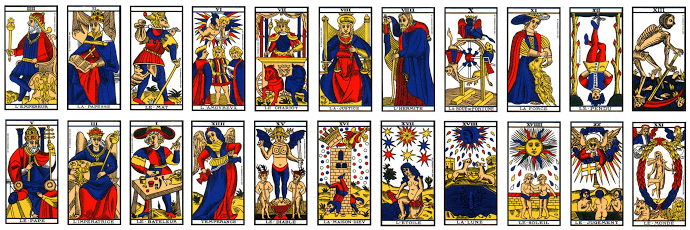
For the card, we use the Tarot de Marseille. Its 22 major arcana include 21 numbered cards, I to XXI, plus the Fool, which has no number. Each mirror hour is matched with the card of the same number: the Chariot (VII) for 07:07, the Moon (XVIII) for 18:18.
The rule runs out at both ends of the day. Zero and 22 have no numbered card, so both go to the Fool, read as 0 at 00:00, when everything still lies ahead, and as 22 at 22:22, where it rounds off the major arcana. As for 23, no card carries it, and 23:23 is reduced to 5 to share the Hierophant with 05:05.
Then there’s 13:13, whose card makes many people flinch. The Rider-Waite-Smith calls it Death. The Marseille deck leaves it untitled, which is why it’s known as the Nameless Arcanum. In either deck, it marks a transformation, the end of one phase making room for the next, and not anyone’s death. To my mind, it’s the most misunderstood card in the tarot.
Last, a trap for anyone who reads with a Rider-Waite-Smith deck, first published in London in 1909. It swapped two cards, making Strength VIII and Justice XI, the reverse of the Marseille order. The hours follow the Marseille numbering, so Justice goes with 08:08 and Strength with 11:11, and both of those articles give the two numbers.
There’s a plain explanation to begin with. Phones, ovens, dashboards, and laptops put the time in front of you all day, and a mind that has noticed 1111 once will flag it the next time, while all the ordinary times slip past unnoticed. That alone doesn’t settle what the number means to you. Take it as a sign or as attention doing its job: in both cases, the moment offers the same small check. What was on your mind just then?
Neither, as we read them. Some numbers carry a heavy reputation online, 1616 for its “negative meaning” or 1212 as a “warning,” yet none of the 24 foretells a misfortune, and none promises luck. What a number does is point to something worth a look: a tension, a decision you keep putting off, a rhythm that no longer suits you. The conclusion stays yours.
Scripture never mentions them. It does give weight to certain numbers, seven and twelve among them, but the notion of a message arriving through a clock or a receipt is modern. The term traces back to Doreen Virtue, a New Age author of the early 2000s who later renounced it. Whether such numbers have a place in your own faith is yours to decide. The readings on these pages come from an esoteric tradition and make no claim on any religion’s behalf.
It’s natural, in grief, to watch for signs, and a number that shows up again can feel like company. There’s nothing in that feeling to correct. Whether the person you’ve lost has any part in it, no one can know, and these pages won’t pretend to. If the number brings them to mind, you can make it a small moment of remembrance, just for them. When the loss weighs too much to carry alone, share it with someone close to you.
Angel numbers, as Kinthia presents them, are a spiritual and symbolic practice. Every page in this section offers a way to read an hour, never a forecast.
Find your orders and your details.
Get back into your account
Enter your username or email address to receive a reset link.
 Bracelets
 Rings
 Pendants
 Necklaces
 Earrings
 Malas
 Agate
 Amazonite
 Amethyst
 Apatite
 Aventurine
 Citrine
 Carnelian
 Clear Quartz
 Garnet
 Jasper
 Labradorite
 Lapis Lazuli
 Malachite
 Obsidian
 Tiger’s Eye
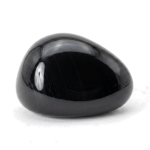 Onyx
 Moonstone
 Sunstone
 Rose Quartz
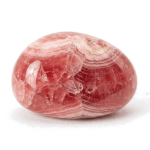 Rhodochrosite
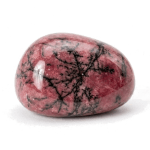 Rhodonite
 Sodalite
 Turquoise
 Yoga & Meditation
 Love
 Good Luck
 Self-Confidence
 Protection
 Balance & Harmony
 Vitality & Energy
 Expression
 7 Chakras Harmony
 Serenity
 Gifts for him
 Gifts for her
 Orgonites
 Geodes & Stones
 Wooden Flowers of Life