10% off sitewide with code BF10
Free shipping on 2 items or more


Listen to the article
Share this read
1717 is a number of returning hope. After a hard stretch, it suggests you’re ready to try what you’ve been quietly preparing. Few Americans meet it on a wall clock, which shows that minute as 5:17 PM: it turns up instead on a receipt, a ticket, or in the corner of a phone screen set to 24-hour display. This article covers its meaning in love, twin flames, and work, introduces Imamiah, the angel who watches over 17:17, and The Star, the tarot card that shares its number, and gives a short numerology reading. Its 23 companions are gathered in our hour-by-hour guide to angel numbers.
1717 is a number of returning hope. After a hard stretch, it suggests you’re ready to try what you’ve been quietly preparing. Few Americans meet it on a wall clock, which shows that minute as 5:17 PM: it turns up instead on a receipt, a ticket, or in the corner of a phone screen set to 24-hour display. This article covers its meaning in love, twin flames, and work, introduces Imamiah, the angel who watches over 17:17, and The Star, the tarot card that shares its number, and gives a short numerology reading. Its 23 companions are gathered in our hour-by-hour guide to angel numbers.
1717 means hope is coming back, and with it the confidence to test something real.
The number often appears near the end of something heavy. A dispute has run its course, a long wait is almost over, or a doubt that kept you frozen has started to loosen. Nothing is fixed overnight, yet the direction has changed, and part of you can feel it.
What 1717 proposes next is modest and concrete: try your idea at a small scale instead of waiting for ideal conditions. Show a draft to two people, sign up for the first class, ask the question you’ve been rehearsing. In this reading, hope isn’t something you sit and wait for. It grows each time you act on it.
Patience belongs to the picture too. A plan that has only just started to breathe needs room, and checking on it every hour won’t make it grow any faster.
A standard American clock never displays 17:17. In 12-hour time, that minute is 5:17 PM, the end of the workday for many people. The four digits come from elsewhere: a laptop on the 24-hour setting, the timestamp on a photo, an order number, a bill of $17.17, a seat in a stadium, a locker at the gym. The same goes for its neighbor 1818 and for every mirror hour after 12:12.
So the number reached you somewhere unexpected, not on the face of a clock. You’re free to see a sign in that, or the simple habit of attention, which keeps catching a pattern once it has found one. Both readings leave you the same small opening: a moment to name what you’re hoping for right now.
Every hour in this series follows the same numerology rule. We start with the hour’s own number. Were it 11 or 22, we’d keep it whole, since those two are master numbers. Any other number has its digits added together. 17 gives 1 + 7 = 8, the root it shares with 08:08, and there’s no master number in play.
17 is a hopeful number, tied to growth and to things coming into bloom. It also calls for patience and for a certain way of letting go: you do your share, then let events unfold without steering each detail. The trait I find wisest is the respect it shows for other people’s paths. 17 leaves them free to have their own experiences, including the ones you’d have talked them out of.
Why stick to a single rule? So that each hour can be set beside the others on equal terms. Those curious about the full method will find it in our numerology guide.
Behind each mirror hour stands one of 72 angels. Their names are Kabbalistic, taken from the Shem HaMephorash, and a French esoteric tradition spreads them evenly over the day, twenty minutes apiece: 72 slots of 20 minutes fill exactly 24 hours. Counting from midnight, Imamiah holds the 52nd, from 17:00 to 17:20.
Perhaps you first came across these angels through birthdays. In English, they’re most often assigned by date of birth, so that each person has one for life. The hourly tradition reads the same names differently: it follows the time of day, and 17:17 falls to Imamiah whatever your birthday.
Imamiah stands for freedom of thought and of action, together with patience, mental strength, and protection. The tradition turns to this angel when someone wants to win back their freedom, literally or figuratively, when they hope to be forgiven, or when they must face gossip. I find that last domain touchingly ordinary. Being talked about behind your back is an old, everyday trouble, and the answer suggested here is steadiness rather than revenge.
Turning to Imamiah needs no ritual. A short prayer, a quiet thought, a minute of meditation, or one slow breath at 17:17 while you name what you’d like to be free of: pick whatever matches your beliefs, or none of these.
Open a Tarot de Marseille at card XVII and you find L’Étoile, the Star. A woman kneels on one knee and pours water from two jugs, one into a river, the other onto the ground. Above her shine a large star and seven smaller ones, and a black bird sits in a tree. She wears nothing, which the card reads as sincerity: no mask, nothing held back.
The Star speaks of hope, of simplicity and frankness, of tension easing, and of trust in what lies ahead. It comes right after card XVI, the Tower, which belongs to 16:16. After the upheaval, a clear night sky and water given freely: that sequence says a lot about 1717, whose hope has usually been earned.
If your own deck is a Rider-Waite-Smith, as it is for most American readers, nothing changes: the card is The Star there too, numbered 17. Our page on the Tarot de Marseille tells you more.
In love, 1717 marks the air clearing: what was tense can soften, and what you hope for can finally be said.
If earlier disappointments have made you guarded, 1717 suggests your confidence may be ready to return. No stranger is being announced. What the number describes is the chance to be open again, and natural, without arming yourself in advance. The Star has no use for a role played to please. Showing up as yourself is the most honest way to meet anyone, and to my mind the most hopeful one.
For couples, the number often comes once the arguments are behind you and a gentler phase is within reach. Enjoy it without taking charge of everything for your partner. Doing things in their place, even out of love, can leave them with no room to act. 1717 favors trust in each other’s ability to find a way.
You were thinking of someone, and the screen read 17:17. The number points back at you rather than at that person. It can’t reveal what they feel or whether you’re in their thoughts, and a comeback is not something it can forecast. What it reflects is your own hope, and the question it leaves is yours to answer: what would honor that hope while respecting the other person’s freedom?
Some sites present 1717 as proof that a twin flame is near or on the way back. This article makes no such claim. Hope gives you no cause to wait for anyone, to message them again, or to follow a person who has chosen to go. A bond worth having is mutual and freely chosen, and no number can produce that. If you feel you’ve met a twin flame, the Star points somewhere steadier: your own life deserves care and attention, whatever the other person decides.
At work, 1717 favors open doors. An opportunity that would have frightened you a year ago may now look within reach, and the number supports a measured risk: a proposal pitched, a new role tried, an idea tested on real people. Measured is the word that matters. Once the step is taken, let the project grow at its own rhythm.
The number has a word about success, too: keep it modest. When things go well, crediting those who helped you will serve you better than taking the whole stage.
On money, 1717 makes no forecast, and none of this is investment guidance. It favors hope backed by good judgment over bets on chance.
Four small steps, to take or leave as you wish:
Hope doesn’t come from a stone. Still, a few share the symbolism of the Star or of Imamiah, and a ring or pendant set with one can bring your intention back to mind each time you glance at it.
Not if luck means something a number hands you. No number makes things happen for you. 1717 reads better as a hopeful moment, one that encourages you to take the chances you’ve prepared for, at a reasonable scale. When good fortune does show up, it tends to find people who were already trying, and that part stays in your hands.
Spiritually, 1717 is about trust: in what’s ahead, and first of all in yourself. The Star pours water without keeping any back, an image of sincerity and of a life lived without disguise. Seen this way, the number asks you to stop bracing for the worst and to let some hope back in, while staying patient with the pace of things.
No. 1717 is silent on health, and the hope it describes is a frame of mind, not a physical effect. Imamiah, the Star card, and the stones listed above are symbols only. For any question about your body, bring it to a doctor. The hope 1717 speaks of can keep you company, but it never takes the place of real answers.
Looking for signs after a death is a deeply human thing to do. Whether 1717 carries anything from the person you lost is a question no one can answer for you, and this page won’t claim it does. Its theme of hope can mean something more modest: that the weight may ease with time, at its own pace. When the number appears, let yourself remember them, and let the people around you offer support.
1717 has been read here through a spiritual and symbolic lens, the one angel numbers belong to. Treat it as food for thought rather than a prediction.
A question, an experience, another way of seeing things… The discovery continues in the conversation.
Find your orders and your details.
Get back into your account
Enter your username or email address to receive a reset link.
 Bracelets
 Rings
 Pendants
 Necklaces
 Earrings
 Malas
 Agate
 Amazonite
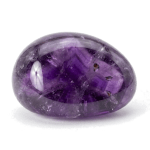 Amethyst
 Apatite
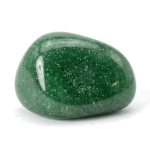 Aventurine
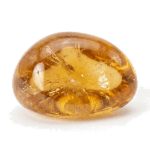 Citrine
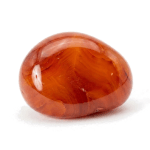 Carnelian
 Clear Quartz
 Garnet
 Jasper
 Labradorite
 Lapis Lazuli
 Malachite
 Obsidian
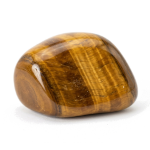 Tiger’s Eye
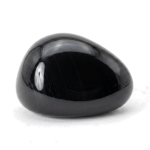 Onyx
 Moonstone
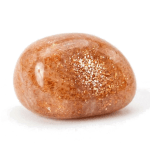 Sunstone
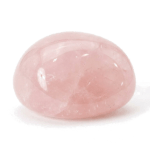 Rose Quartz
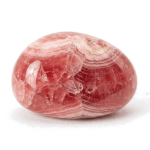 Rhodochrosite
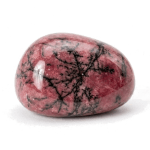 Rhodonite
 Sodalite
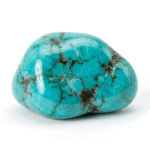 Turquoise
 Yoga & Meditation
 Love
 Good Luck
 Self-Confidence
 Protection
 Balance & Harmony
 Vitality & Energy
 Expression
 7 Chakras Harmony
 Serenity
 Gifts for him
 Gifts for her
 Orgonites
 Geodes & Stones
 Wooden Flowers of Life